
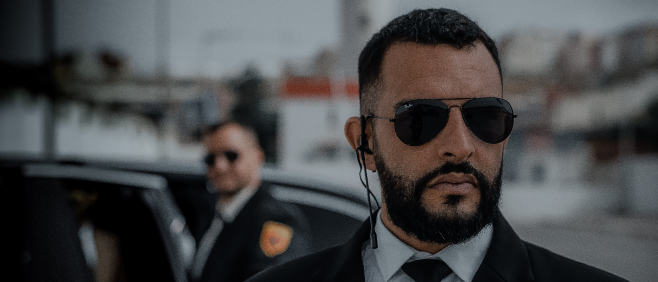
Protection Shaped by Protocol, Not Just Threat
Diplomatic security Morocco engagements differ from a standard close protection detail in one fundamental way: the threat picture is only half the brief. Who stands where in a receiving line, which vehicle a principal enters first, how a delegation is announced and seated — precedence and official etiquette dictate the physical choreography of the whole visit, and a protection plan that ignores it creates friction with the host, not just risk for the client. Our teams are briefed on protocol before they are briefed on threat, so movement plans support the official programme rather than fight it.
This extends to how we build the detail itself. A royal or diplomatic principal is rarely travelling alone — spouses, aides, protocol officers and sometimes a small entourage all need to be accounted for inside a single, coherent close protection plan, with clear roles for who covers the principal directly and who manages the wider party.
Working With Embassies and Government Security, Not Around Them
Every official visit to Morocco already involves some layer of state security — an embassy's regional security officer, a host ministry's protocol department, or a government security detail assigned to the visit. We coordinate directly with that structure from the earliest planning stage rather than running a parallel operation that duplicates or contradicts it. In practice that means shared advance meetings, agreed lines of communication for the day of the visit, and a clear handoff of responsibility at each stage — airport arrival, motorcade, venue, departure — so there is never ambiguity about who is covering what.
For missions that fall outside strict diplomatic channels — a royal family's private visit, or a government-adjacent business delegation — the same coordination discipline applies through our corporate and delegation security service, adjusted for a lower-profile, less formally protocolled visit.
What a State-Visit-Grade Advance Covers
- Route and venue survey conducted jointly with host-country security where applicable
- Multi-vehicle motorcade planning, including formation, spacing and contingency routing
- Timed movement schedule built against the official programme, minute by minute
- Liaison points agreed in advance with embassy or ministry protocol staff
- Pre-arrival risk assessment covering venues, routes and every stop on the itinerary
Motorcade and Multi-Vehicle Movement
Moving an official delegation through Moroccan cities — dense medina approaches in Fez or Marrakech, ceremonial routes in Rabat, or airport-to-venue transfers in Casablanca — requires more than a lead and follow car. We plan formation according to party size and threat level, brief every driver on the route and its contingencies before departure, and stage secure transport assets so a delay at one checkpoint doesn't compromise the schedule for the rest of the visit. Advance work happens far enough ahead that route changes, closures or last-minute protocol adjustments get absorbed quietly rather than becoming visible problems on the day.